

When misinformation and manipulated visuals run rampant, the need for reliable tools to discern real images from AI-generated ones has never been more urgent. Optic’s ‘AI or Not’ tool emerges as a beacon of hope, offering a promising solution to this dilemma. Developed by Optic, ‘AI or Not’ is a free web-based application that vows to swiftly and accurately identify images created by artificial intelligence. With advanced algorithms and machine learning techniques at its core, this tool is poised to become a pivotal player in the ongoing battle for image authenticity.
Read More: Does ChatGPT plagiarize? Controversy Surrounding AI Generated Content
It’s essential to note that no single method is foolproof, and there will always be images that defy easy categorization. As AI continues to advance, so too will our ability to detect its creations. The ability to identify AI-generated content is a critical aspect of maintaining trust and authenticity in the digital world, and it’s a field of ongoing research and development.
The Rise of AI-Generated Visuals
The proliferation of artificial intelligence has ushered in a new era of image creation. AI models like Stable Diffusion, Midjourney, Dall-E, and GAN have demonstrated astonishing capabilities in generating lifelike images that blur the boundaries between reality and the digital realm. These AI models have the power to create visuals that are nearly indistinguishable from those captured by human photographers and artists. However, this newfound power raises concerns about deception, misinformation, and fraud in the digital sphere.
Read More: Code Plagiarism Checker: A Comprehensive Guide
Optic’s ‘AI or Not’ Tool: A Beacon of Hope
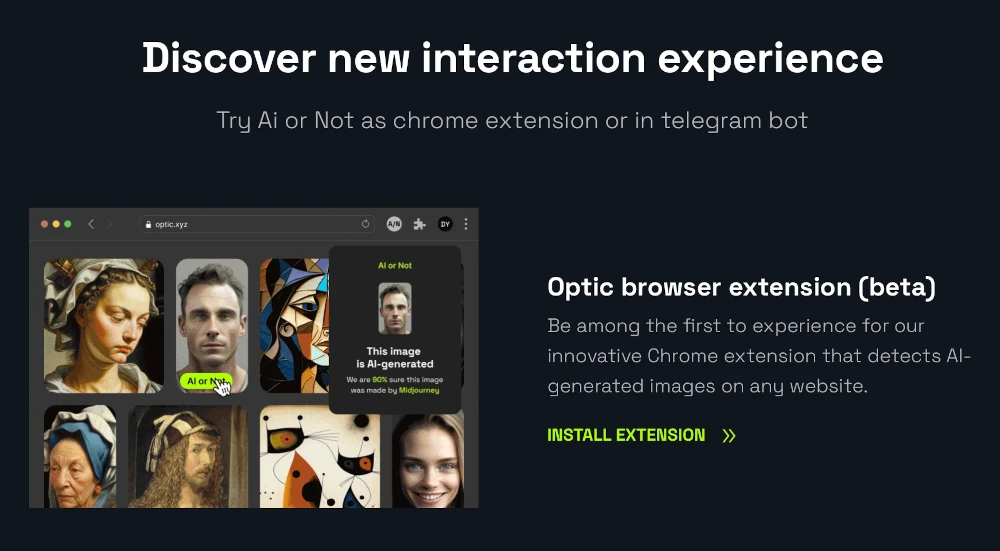
Optic, a forward-thinking company at the forefront of AI technology, has answered the call for a solution. They have introduced ‘AI or Not,’ a free web-based application that boasts the ability to differentiate between AI-generated images and those created by humans. The tool relies on a sophisticated content recognition engine, making it a frontrunner in the emerging Web3 landscape.
The process is simple and accessible to all users. Whether you’re uploading an image or providing a URL to an image hosted online, ‘AI or Not’ springs into action. Within a matter of seconds, it provides feedback on the image’s authenticity. If the image is AI-generated, the service goes a step further, identifying the specific AI model used, whether it’s Midjourney, Stable Diffusion, or Dall-E.
The Technology Behind ‘AI or Not’
At the heart of ‘AI or Not’ lies advanced algorithms and machine learning techniques. These technologies enable the tool to meticulously analyze images, scrutinizing them for telltale signs of AI generation. The process involves comparing the input image with known patterns, artifacts, and characteristics associated with various AI models and human-made images. This thorough examination allows ‘AI or Not’ to make a precise determination regarding the image’s origin.
The Mission of Optic
Optic’s mission with ‘AI or Not’ goes beyond the tool itself. The company aims to bring transparency to media on blockchains, creating an environment where all communities can harness their creative and economic potential. In a digital world fraught with misinformation and fraud, this mission carries profound significance.
Real-World Testing of ‘AI or Not’
To gauge the real-world effectiveness of ‘AI or Not,’ PetaPixel, a respected photography resource, conducted a series of tests using various synthetic and real images. These tests aimed to assess the tool’s capabilities and its limitations.
The results were a mixed bag. In some instances, ‘AI or Not’ performed admirably, accurately identifying both real and AI-generated images. However, the tool faced challenges when presented with complex AI-generated images, especially those involving altered identities or deceptive content.
Can you tell if an image is AI-Generated?
Identifying whether an image has been generated by artificial intelligence (AI) or created by a human can be a challenging task, but it’s becoming increasingly important in an era where AI-generated content is on the rise. While it’s not always easy to determine the origin of an image with absolute certainty, there are certain cues and techniques that can help us make an educated guess.
- Complexity and Realism: One of the primary indicators that an image might be AI-generated is the level of complexity and realism it exhibits. AI, especially advanced models like GANs (Generative Adversarial Networks) and DALL-E, has the capability to produce highly detailed and realistic images that can sometimes be too perfect to be created by a human hand. This includes intricate patterns, highly detailed textures, and scenes that are almost dreamlike in their precision.
- Consistency and Repetition: AI often generates images that display a certain degree of repetition or consistency. This is because AI models learn from vast datasets, and they may inadvertently replicate certain patterns. For example, you might notice repeated elements like trees, clouds, or buildings in an AI-generated landscape image.
- Artistic Style: Some AI models are known for their distinct artistic style. For instance, DALL-E, developed by OpenAI, is famous for its ability to generate images from textual prompts. Images generated by DALL-E often have a specific artistic style that sets them apart from human-created artwork. Identifying these unique styles can be a clue to the image’s AI origin.
- Metadata Examination: The metadata embedded in an image file can provide valuable information about its origin. This includes details like the software used to create the image, the device it was created on, and even the date and time of creation. While this information isn’t foolproof, it can offer some insights into whether the image was AI-generated or human-made.
- Image Databases: Many AI-generated images can be traced back to online databases where they are readily available. These images are often used for training AI models. If you come across an image that appears in multiple places online, especially on AI-related websites or forums, it’s a strong indicator that it might be AI-generated.
- AI Detection Tools: As the demand for identifying AI-generated content grows, several AI detection tools and platforms are emerging. Tools like ‘AI or Not’ by Optic aim to detect AI-generated images and even specify which AI model was likely used to create them. These tools leverage advanced algorithms and machine learning techniques to analyze images and identify signs of AI generation.
- Human Inspection: When all else fails, human inspection can be a valuable resource. Experienced artists, designers, and image analysts may be able to spot subtle clues that suggest AI involvement, such as artifacts, imperfections, or elements that seem out of place.
Looking Ahead
While ‘AI or Not’ demonstrates promise in identifying AI-generated images, it is not without its limitations. The tool’s current capabilities are confined to images generated by specific AI models, which may not cover the full spectrum of AI-generated content. As AI technology evolves, so too must the tools designed to combat its deceptive potential. The quest for truth in the digital age is an ongoing journey, offering opportunities for innovation and progress along the way.
‘AI or Not’ represents a significant step toward ensuring the authenticity of digital images in an age of AI-generated content. As the technology behind the tool advances and expands its capabilities, it holds the potential to become an indispensable resource in the ongoing battle for truth and transparency in the digital realm.